
멀티탭 250V와 220V의 첫 구분
멀티탭 250V 표기를 처음 보면 집에서는 220V 전기를 쓰는데 30V가 어디에서 더해지는지, 멀티탭이 전압을 높이는지 궁금해질 수 있습니다. 본체에 적힌 16A 250V~와 가정용 220V는 서로 다른 대상을 가리킵니다.
220V는 가정에 공급되는 전기의 표준전압이고, 멀티탭 250V는 제품에 정해진 정격전압입니다. 일반 멀티탭 안에는 220V를 250V로 바꾸는 변압기가 없습니다. 벽 콘센트에서 받은 전압을 플러그와 전선, 내부 동단자를 거쳐 여러 콘센트로 전달합니다.
집에 들어오는 전기의 숫자와 제품이 대응하도록 설계된 전압 등급을 같은 의미로 읽으면 혼란이 생깁니다. 발전소에서 집까지 전압이 어떻게 바뀌는지 따라가면 220V와 250V의 차이가 훨씬 쉽게 풀립니다.
발전소에서 지역 배전선까지
전기는 발전소에서 220V로 출발해 그대로 집까지 오는 것이 아닙니다. 멀리 보낼 때 전선에서 생기는 손실을 줄이기 위해 먼저 전압을 크게 높입니다. 한전의 주요 송전계통에는 765kV, 345kV, 154kV 같은 높은 전압이 사용됩니다.
도시와 주거지역 가까이에 도착하면 변전소가 전압을 차례로 낮춥니다. 동네 주변의 일반적인 배전선에서는 22.9kV, 즉 22,900V가 널리 쓰입니다. 전봇대의 전선이나 지중 배전케이블을 지나는 이 단계까지도 아직 집에서 바로 쓸 수 있는 220V는 아닙니다.
발전소 → 송전선 → 변전소 → 22.9kV 배전선 → 배전용 변압기 → 220V 인입 → 전력량계 → 분전반 → 벽 콘센트 → 멀티탭
송전은 전기를 멀리 보내는 과정이고 배전은 동네와 건물 가까이 나누어 보내는 과정입니다. 우리가 사용하는 멀티탭은 이 긴 흐름의 가장 마지막에 놓입니다.

마지막 변압과 가정 인입
단독주택 주변에서는 전봇대에 달린 원통형 주상변압기가 마지막으로 전압을 크게 낮추는 경우가 많습니다. 동네까지 온 22,900V를 가정과 상가에서 쓸 수 있는 낮은 전압으로 바꿉니다. 전선이 땅속으로 들어간 지역에서는 지상변압기나 지중 배전설비가 같은 일을 합니다.
아파트는 단지 전기실의 변압기가 이 역할을 맡는 경우가 많습니다. 22.9kV를 받아 380V와 220V 계통으로 낮추고 각 세대에는 220V를 보냅니다. 그 전기는 계량기와 분전반의 차단기를 지나 벽 콘센트에 도착합니다.
전압을 바꾸는 것은 변압기이고, 멀티탭은 이미 220V로 낮아진 전기를 나누어 전달합니다. 전봇대의 변압기와 집 안의 멀티탭은 이름과 역할이 전혀 다릅니다.


220V 표준전압의 실제 범위
가정용 220V는 콘센트에서 언제나 정확히 220.0V만 나온다는 뜻이 아니라 전기를 공급하는 기준값입니다. 한전 전기공급약관은 220V의 정상 유지범위를 220V ±13V, 즉 207V에서 233V로 두고 있으며 표준주파수는 60Hz입니다.
시간대와 전기 사용량, 배전선의 거리에 따라 측정값은 이 범위 안에서 조금 달라질 수 있습니다. 218V나 225V가 측정되어도 정상범위에 들어갈 수 있습니다. 그래도 우리 집 전기를 250V로 공급한다는 뜻은 아닙니다. 가정 전기의 기준은 220V이고 250V는 멀티탭 쪽의 설계 기준입니다.

250V 정격전압의 의미
정격전압은 제품을 어느 전압 등급에 맞춰 만들었는지를 나타내는 숫자입니다. 멀티탭의 250V~는 250V가 나온다는 표시가 아니라 플러그와 콘센트, 스위치, 전선과 절연구조를 250V 정격에 맞춰 설계했다는 뜻입니다. 뒤의 물결 기호는 교류용이라는 표시입니다.
IEC 60906-1은 200V부터 250V까지의 교류 배전계통에 사용하는 플러그와 콘센트를 16A 250V AC 등급으로 다룹니다. 한국의 220V도 이 범위 안에 들어갑니다. 국내 가정용 배선기구는 KS C 8305와 KS C IEC 60884-1 체계에 따라 구조와 시험 조건을 적용합니다.
| 표시 | 가리키는 대상 | 뜻 |
|---|---|---|
| 220V | 가정의 전력계통 | 한전이 공급하는 표준전압 |
| 250V~ | 멀티탭과 배선기구 | 교류 제품에 부여된 정격전압 |
쉽게 말해 집에서는 220V를 쓰지만 써보니 멀티탭은 그보다 높은 250V 정격까지 생각해 설계한 제품입니다. 한전의 정상 공급범위 상한인 233V보다 높은 전압 등급에 맞춰 플러그와 내부 동단자, 스위치와 절연구조를 구성하므로 정상적인 220V 사용에서 전압 기준에 여유를 둡니다. 250V를 추가 출력이나 변압 기능으로 읽지만 않으면 됩니다.
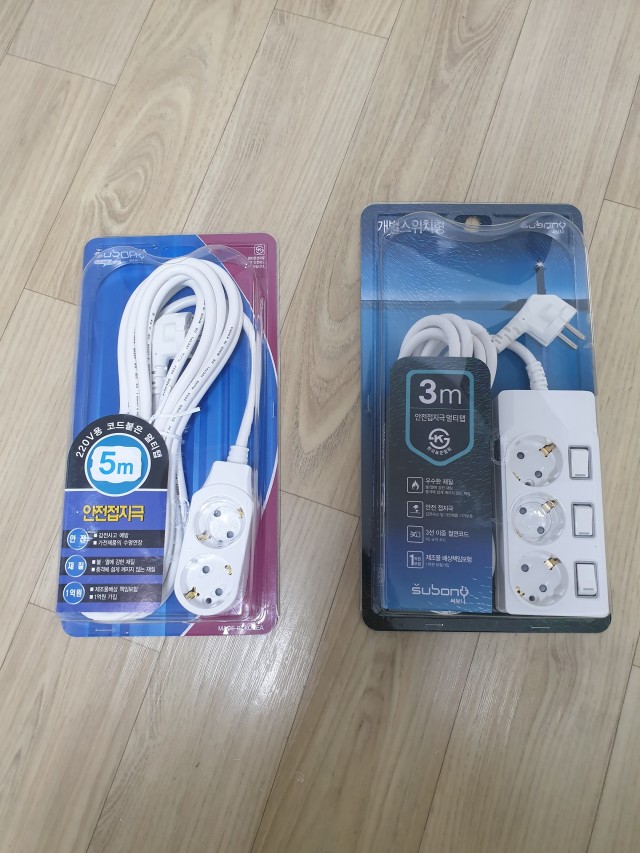
튼튼해보이고 뭔가 안정돼보입니다 상태 표시 LED시인성도 좋네요 잘 쓰겠습니다~!
fkg*******
16A 250V 표기의 읽는 순서
16A 250V~에서 V는 제품이 대응하는 전압, A는 멀티탭을 통해 흐를 수 있는 전류를 뜻합니다. 전압을 물을 밀어 보내는 압력에 비유한다면 전류는 실제로 흐르는 물의 양에 가깝습니다. 두 숫자는 서로 다른 역할을 합니다.
250V와 16A를 곱해 4,000W를 한국 가정에서 그대로 사용하는 것은 아닙니다. 우리 집의 공급전압은 220V이므로 220V × 16A를 단순 계산하면 3,520이라는 값이 나옵니다. 실제 가전은 종류에 따라 전력 특성이 다르고 멀티탭도 계산상 한계까지 채워 쓰지 않습니다.
써보니 일반 멀티탭은 16A 250V 정격으로 제작하며 국내 220V 환경에서는 연결한 가전의 전체 합산 소비전력을 3,200W 이내로 권장합니다. 3,200W는 각 콘센트마다 반복되는 값이 아니라 하나의 플러그와 전선을 통과하는 멀티탭 전체 기준입니다.

정격전압과 보호기능의 경계
250V 표기는 낙뢰나 순간적인 이상전압을 모두 막는다는 뜻은 아닙니다. 이런 전기 충격을 줄이는 서지보호는 별도의 부품과 표시가 필요한 기능입니다. 250V 정격과 서지보호는 다른 항목입니다.
250V 정격이라고 해외 어디에서나 바로 쓸 수 있는 것도 아닙니다. 방문 국가의 전압과 주파수, 플러그 모양, 접지 방식, 연결할 가전의 입력 범위를 각각 맞춰야 합니다. 모양만 바꾸는 여행용 변환플러그는 전압을 바꾸는 변압기가 아닙니다.
또한 정격전압이 맞아도 플러그가 덜 꽂히거나 벽 콘센트가 헐겁고, 전선이 눌리거나 전체 소비전력이 지나치면 접점 발열과 과부하가 생길 수 있습니다. 250V라는 한 숫자가 접촉 상태와 전선, 전류, 사용시간까지 대신하지는 않습니다.

숫자를 제대로 읽는 써보니 기준
멀티탭의 표시는 한 줄로 읽으면 쉽습니다. 250V는 제품을 설계한 전압 등급, 16A는 멀티탭 전체에 흐르는 전류 기준, 3,200W는 써보니가 국내 220V 사용에서 권장하는 전체 합산 소비전력입니다.
전기히터와 온풍기, 건조기, 에어컨처럼 소비전력이 큰 가전은 제품 설명서가 요구하는 접지된 벽면 단독 콘센트가 우선입니다. 설치상 연장이 불가피하고 가전 설명서에서 허용할 때만 정격과 보호구조가 맞는 고용량 제품을 검토합니다.
써보니 제품은 가정의 220V보다 높은 250V를 정격으로 잡아 설계합니다. 평소에는 220V를 사용하더라도 제품 쪽은 250V 등급까지 생각해 플러그와 스위치, 내부 동단자와 절연구조를 맞춘 것입니다. 정상적인 220V 환경에서 전압 기준에 여유를 두고 사용할 수 있다는 뜻입니다.
잘 만든 멀티탭은 250V라는 숫자 하나로 끝나지 않습니다. 써보니는 국내 제조 과정에서 16A가 흐르는 전선과 플러그, 내부 동단자의 접촉 상태, 절연과 안전접지, 스위치와 본체 조립까지 완제품의 한 경로로 관리합니다. KS와 KC 기준에 맞는 표시가 실제 제품의 재료와 구조로 이어져야 하기 때문입니다.
집으로 들어오는 전기는 220V이고 써보니 멀티탭은 그 전기를 250V 정격 설계 안에서 받아 전달합니다. 그래서 250V 표기는 전압을 높인다는 뜻이 아니라, 220V를 더 여유 있는 제품 기준 안에서 사용한다는 뜻입니다.
From Power Generation to a 220V Household Outlet
Electricity does not leave a generating station at 220V and travel unchanged to a home. Power is transmitted over long distances at high voltage because, for a given amount of power, raising voltage allows current to be reduced. Lower current reduces resistive loss in the conductors. Korea uses major transmission levels such as 765kV, 345kV, and 154kV, and substations progressively transform those levels as electricity approaches cities and residential areas.
A common regional distribution level is 22.9kV. This is the voltage carried by many overhead distribution lines and underground distribution cables near neighborhoods. It is still far above the voltage intended for ordinary household equipment. A distribution transformer performs the final large reduction before electricity enters a house or a low-voltage building system.
In an overhead distribution area serving detached homes, that transformer may be the cylindrical unit mounted on a utility pole. In an underground area, a pad-mounted or underground distribution transformer performs the corresponding task. Many apartment complexes receive power at 22.9kV and use transformers in their electrical rooms to create 380/220V low-voltage systems for common facilities and individual dwellings.
After transformation, electricity passes through the service connection, energy meter, main distribution panel, and branch circuit breaker before reaching a wall receptacle. A power strip is located at the very end of this chain. Its job is to distribute the voltage already supplied by the wall receptacle. An ordinary passive power strip is not the transformer that changes 22.9kV into 220V and it does not raise 220V into 250V.
Supply Voltage and Product Rated Voltage Are Different
The 220V value identifies the standard supply voltage used by a Korean household circuit. The 250V value marked on a power strip identifies the rated voltage assigned to the product. A rated voltage is the value to which the intended operation, construction, and performance characteristics of a component or product refer. These two numbers describe different sides of the connection, so they do not need to be identical.
KEPCO’s electricity supply terms specify a standard voltage of 220V with a maintained range of 220V plus or minus 13V. That corresponds to 207V through 233V. The standard frequency is 60Hz. A measured value such as 218V or 225V can therefore be within the normal supply range. The existence of a range does not mean that a residence is normally supplied at 250V.
IEC 60906-1 describes a household plug and socket-outlet system rated 16A 250V AC for connection to distribution systems whose nominal voltages lie between 200V and 250V AC. Korea’s 220V supply belongs to that nominal-voltage range. The 250V marking is therefore a standardized product class, not a statement that a Korean wall outlet produces 250V.
The tilde after 250V indicates alternating current. Both household 220V and a 250V AC product rating are normally expressed using RMS values. Comparing the approximately 311V instantaneous peak of a 220V sine wave directly with a 250V RMS product rating would mix two different measurements. The relevant comparison is the 220V RMS supply system with the 250V AC rated class.
How to Read the Marking 16A 250V AC
The marking 16A 250V AC contains two separate ratings. Voltage, shown in volts, describes electrical potential difference. Current, shown in amperes, describes the flow through the plug, cord, internal conductors, switches, and contacts. A useful everyday analogy compares voltage to pressure and current to flow, but the product must be designed for both conditions at the same time.
The 250V figure must not be multiplied by 16A to claim that 4,000W may be used from a Korean household outlet. The supply is nominally 220V. Multiplying 220V by 16A gives 3,520VA. For a nearly resistive load, such as a simple heating element, the real power can be close to 3,520W. For electronic or motor loads, watts and volt-amperes are not automatically identical because power factor also matters.
Subony general-purpose power strips are rated 16A 250V. For normal use on a Korean 220V supply, Subony recommends keeping the combined nameplate consumption of connected appliances within 3,200W. That recommendation applies to the entire product. It is not a separate allowance for every outlet, and adding more outlets does not create more input current capacity.
A four-outlet strip and a six-outlet strip can make connection more convenient, but every operating appliance still draws through the same input plug and flexible cord. The correct calculation adds the equipment that can operate at the same time. The voltage rating tells where the strip belongs; the current rating and combined appliance load determine how heavily it is being used.
What the 250V Marking Does Not Promise
A 250V rating does not mean that the power strip regulates its output to 250V. A basic strip contains no step-up transformer for that purpose. It passes the household supply to its outlets through conductors, contacts, and switches. USB models may include a separate low-voltage power supply for the USB ports, but that does not change the AC voltage delivered by the ordinary receptacles.
The marking is also not a surge-protection threshold. Lightning-related transients and switching surges are short-duration overvoltage events that require separately designed surge protective components and specifications. A product marked 250V AC should not be advertised as a surge protector unless that separate function is actually provided and identified.
Nor does 250V alone make a strip suitable for every country. International use requires the supply voltage, frequency, plug pattern, earthing arrangement, local approval, and the input range of every connected appliance to be considered. A travel plug adaptor usually changes only the mechanical plug shape. It does not automatically transform voltage.
Finally, voltage rating does not replace sound contact. A partly inserted plug, a worn wall receptacle, damaged insulation, a compressed cord, contamination, or excessive combined current can create heat even when the nominal supply voltage is correct. The complete connection path matters: wall receptacle, input plug, cord, strip body, individual contacts, and appliance plugs.
Using the Rating in Everyday Decisions
Read a power strip label as a group of related conditions. The 250V AC marking identifies the voltage class. The 16A marking identifies the rated current of the complete strip. Subony’s 3,200W recommendation provides a practical combined-load limit for normal Korean 220V use. Outlet count, cord length, protective earthing, switch design, certification, and any separately stated protective function complete the selection.
High-consumption appliances require their own instructions to be followed first. Space heaters, air conditioners, clothes dryers, and similar equipment may require a dedicated grounded wall receptacle. A high-capacity extension product should be considered only when extension is unavoidable and the appliance manufacturer permits it. The words 250V on an ordinary strip do not override those installation requirements.
Subony treats the marked rating as a property of the finished product rather than an isolated label. Cord conductors, insulation, strain relief, plug pins, internal copper-alloy paths, contact pressure, earthing, switches, flame-resistant parts, and enclosure assembly must function as one path. Manufacturing controls are intended to keep the completed item consistent with its declared 16A 250V conditions.
The practical conclusion is simple. A Korean home uses a nominal 220V supply, while a power strip marked 250V AC belongs to a standardized rated-voltage class that includes that supply. The strip does not create the extra 30V, consume more electricity because of the number, or protect against every voltage event. Correct use comes from reading voltage, current, total appliance load, connection condition, and protective features separately.
추가 정보
멀티탭 250V 핵심
멀티탭 250V는 공급전압이 아니라 제품을 설계한 전압 등급입니다. 한국 가정에는 220V가 공급되고, 써보니 제품은 그보다 높은 250V 정격에 맞춰 플러그와 전선, 내부 동단자, 스위치와 절연구조를 구성합니다.
일반 멀티탭은 변압기가 아니므로 220V를 250V로 높이지 않습니다. 벽 콘센트에서 받은 전기를 플러그와 전선, 내부 접점을 거쳐 각 구로 전달합니다.
한전의 220V 유지범위는 207V에서 233V이며 표준주파수는 60Hz입니다. 쉽게 말해 집에서는 220V를 사용하지만 써보니 멀티탭은 250V 등급까지 생각해 만든 제품이라 정상적인 가정용 전압에서 정격상 여유를 둡니다.
표시별 의미
| 표시 | 의미 | 아닌 것 |
|---|---|---|
| 220V | 한국 가정의 표준 공급전압 | 항상 정확히 220.0V인 고정 측정값 |
| 250V~ | 멀티탭의 교류 정격전압 | 멀티탭 출력전압 또는 변압 기능 |
| 16A | 멀티탭 완제품의 정격전류 | 각 구마다 따로 주어지는 전류 |
| 3,200W | 국내 220V에서 써보니의 전체 합산 권장값 | 한 구마다 사용할 수 있는 전력 |
자주 묻는 질문
집에 실제로 250V가 들어오는 건가요?
아닙니다. 한국 가정의 표준 공급전압은 220V입니다. 멀티탭의 250V는 제품에 부여된 정격전압입니다.
250V 멀티탭을 220V 콘센트에 사용해도 되나요?
가정용으로 인증된 16A 250V 멀티탭은 220V 계통에서 사용하는 정상적인 배선기구입니다. 제품의 정격전류와 전체 소비전력도 같이 지킵니다.
멀티탭이 220V를 250V로 높이나요?
일반 멀티탭에는 그런 변압 기능이 없습니다. 벽 콘센트의 전압을 각 연결구로 전달합니다.
250V 뒤의 물결 기호는 무엇인가요?
교류 AC용 제품이라는 표시입니다. 한국의 가정용 전원도 60Hz 교류입니다.
왜 제품에도 220V라고 적지 않나요?
플러그와 콘센트는 특정 순간의 측정값 대신 표준에서 정한 제품 정격으로 표시합니다. 250V급은 공칭 200V에서 250V 교류 계통을 포괄합니다.
집에서 225V가 측정되면 이상인가요?
한전의 220V 유지범위는 207V에서 233V입니다. 225V는 이 범위에 들어갑니다. 범위를 지속해서 벗어나거나 가전 이상이 동반되면 전기설비 점검이 필요합니다.
250V는 서지보호 수치인가요?
아닙니다. 250V는 정격전압이고 서지보호는 별도의 회로와 제품 표시가 필요한 기능입니다.
16A 250V면 한국에서도 4,000W를 쓸 수 있나요?
아닙니다. 한국에서는 220V를 기준으로 계산합니다. 써보니 일반 멀티탭은 연결 가전의 전체 합산 소비전력을 3,200W 이내로 권장합니다.
220V 교류의 순간 최대값이 250V보다 높은데 괜찮나요?
220V와 250V 교류 정격은 모두 실효값 기준으로 읽습니다. 파형의 순간 최대값과 정격 실효값을 직접 비교하지 않습니다.
250V 멀티탭이면 해외에서도 바로 쓸 수 있나요?
250V 표기만으로 결정할 수 없습니다. 현지 전압과 주파수, 플러그, 접지, 인증, 연결 가전의 입력 범위를 각각 맞춰야 합니다.
가정까지 오는 전기의 순서
발전소에서 출발한 전기는 송전선과 변전소, 22.9kV 배전선과 배전용 변압기를 거쳐 220V로 낮아진 뒤 전력량계와 분전반, 벽 콘센트로 들어옵니다.
실효값 기준
가정용 220V와 제품 정격 250V AC는 교류 실효값 기준입니다. 교류 파형의 순간 최대값을 제품 정격과 바로 비교하는 계산은 사용하지 않습니다.
전류와 전체 소비전력
16A는 멀티탭 전체의 정격전류입니다. 연결한 모든 가전은 하나의 플러그와 전선을 통과하므로 소비전력도 전체 합계로 계산합니다.
자료 기준
공급전압과 주파수는 한전 전기공급약관, 플러그와 콘센트의 전압 등급은 IEC 60906-1과 KS C 8305 및 KS C IEC 60884-1의 적용 체계를 기준으로 작성했습니다.
관련 글
- 16A 멀티탭 정격과 사용 기준
- 멀티탭 전체 허용전력과 3,200W 기준
- 4구 이상 멀티탭의 과부하차단 구조
- 고용량 멀티탭의 차단기 구조
- IWID 써보니 브랜드 페이지
- 써보니 공식몰
- 써보니 스마트스토어