
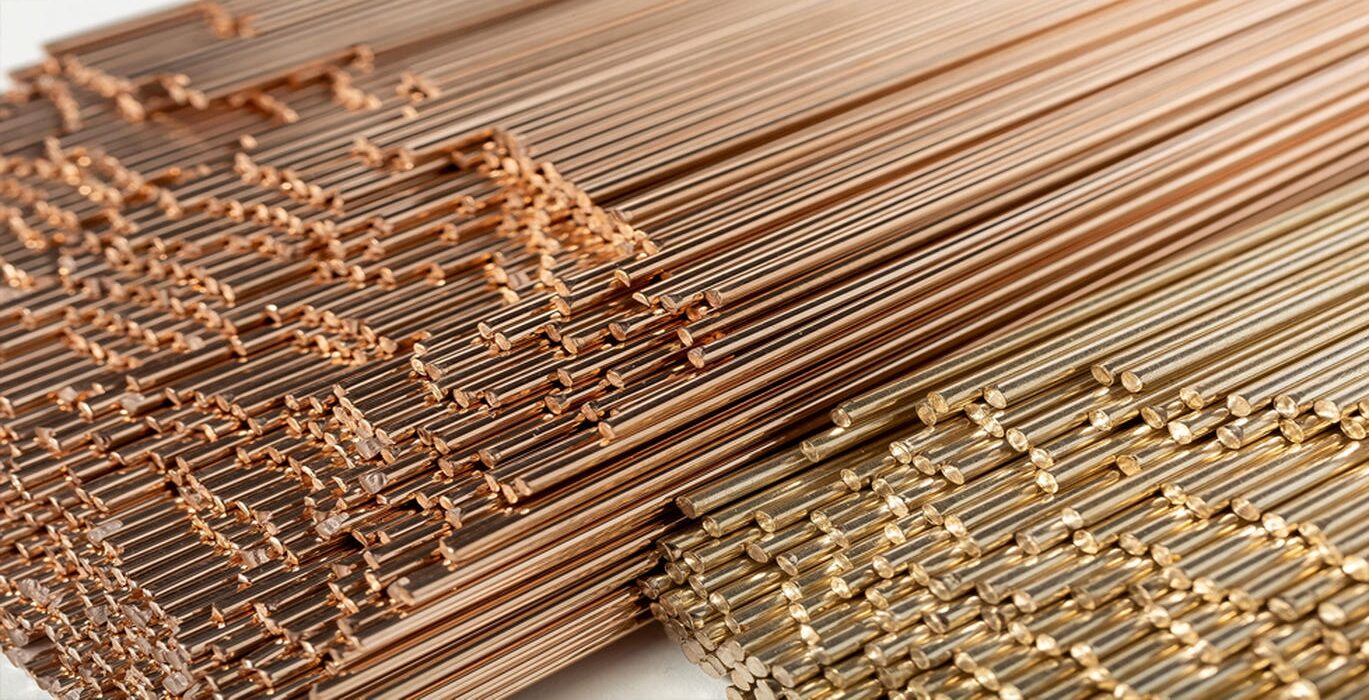
BCuP 용접재와 BAg 은계 브레이징 합금의 이해
브레이징 공정에서 용접재는 단순히 금속을 붙이는 보조 재료가 아니라, 접합부의 강도와 내구성, 열적 안정성, 전기적 특성, 그리고 장기적인 신뢰성을 결정하는 핵심 요소입니다. 특히 구리와 구리 합금, 강, 스테인리스강, 니켈 합금 등 서로 다른 금속을 접합해야 하는 산업 현장에서는 은계 브레이징 합금이 오랜 기간 표준적인 선택지로 사용되어 왔습니다. 이 가운데 BCuP 계열과 BAg 계열은 용도와 성능이 뚜렷하게 구분되는 대표적인 브레이징 용접재입니다.
BCuP 계열 브레이징 용접재의 특징
BCuP는 구리를 주성분으로 하고 인을 합금 원소로 포함한 브레이징 용접재입니다. 가장 큰 특징은 인의 탈산 작용으로 인해 구리와 구리를 접합할 때 플럭스 없이도 브레이징이 가능하다는 점입니다. 용융 상태의 인은 산소와 결합하여 산화물을 제거하는 역할을 하며, 이로 인해 공정이 단순해지고 작업 비용을 줄일 수 있습니다. 이러한 특성 덕분에 구리 배관이나 열교환기 제조 공정에서 널리 사용되고 있습니다.
금속학적으로 BCuP는 용융 온도 범위가 비교적 좁고, 가열 시 유동성이 좋아 모세관 작용에 의한 접합성이 우수합니다. 다만 인은 철, 니켈, 코발트 계열 금속과 반응할 경우 취성 인화물을 형성할 수 있기 때문에, 강이나 스테인리스강과의 직접적인 접합에는 한계가 있습니다. 이로 인해 BCuP는 주로 구리 및 구리 합금 위주의 배관, 냉동·공조 설비, 열교환기 분야에서 사용됩니다.
BAg 계열 은계 브레이징 합금의 특징
BAg 계열은 은을 주성분으로 하며, 구리, 아연, 인듐 등 다양한 합금 원소가 조합된 브레이징 용접재입니다. 은은 낮은 용융점과 뛰어난 젖음성을 가지고 있어 다양한 금속과의 상용성이 매우 우수합니다. 이러한 특성 덕분에 BAg는 구리뿐만 아니라 강, 스테인리스강, 니켈 합금 등 폭넓은 금속 조합에서 안정적인 접합 품질을 확보할 수 있습니다.
BAg 합금은 조성 설계를 통해 용융 범위를 조절할 수 있어 비교적 낮은 온도에서도 브레이징이 가능하며, 열에 민감한 부품이나 정밀 조립 부품에도 적용됩니다. 은 함량이 높아질수록 유동성과 접합 강도는 향상되지만, 재료 비용이 증가하는 단점이 있습니다. 최근에는 환경 규제와 작업 안전을 고려해 카드뮴이 포함되지 않은 BAg 조성이 주로 사용되고 있습니다.
BCuP와 BAg의 적용 차이
BCuP와 BAg의 차이는 합금 구성뿐 아니라 적용 대상과 공정 조건에서도 분명하게 나타납니다. BCuP는 구리 계열 접합에 최적화된 경제적인 용접재로, 대량 생산과 공정 효율성이 중요한 분야에 적합합니다. 반면 BAg는 다양한 금속 간 접합이 가능하며, 높은 신뢰성과 안정성이 요구되는 산업 분야에서 사용됩니다.
공정 측면에서도 차이가 있습니다. BCuP는 구리-구리 접합 시 플럭스 사용을 줄일 수 있는 반면, BAg는 대부분의 경우 플럭스를 사용해야 합니다. 이는 작업 환경과 공정 관리, 생산성에 영향을 미치는 요소로 작용합니다.
적용분야
BCuP는 냉동·공조용 배관, 에어컨용 동관, 산업용 열교환기, 급수 및 가스 배관 등 비용 효율성과 반복 생산이 중요한 분야에서 주로 활용됩니다. 이러한 환경에서는 극도로 높은 기계적 강도보다는 충분한 접합 강도와 우수한 열전도성이 중요하게 고려됩니다.
BAg는 항공우주 부품, 의료기기, 전기·전자 부품, 고압 밸브와 피팅, 정밀 기계 부품 등 고신뢰성과 복합 소재 접합이 필요한 분야에서 사용됩니다. 특히 스테인리스강과 구리, 니켈 합금과 구리처럼 이종 금속을 접합해야 하는 경우 안정적인 성능을 발휘합니다.
BCuP와 BAg는 모두 브레이징 공정에서 중요한 역할을 하는 용접재이지만, 적용 목적과 사용 환경은 명확히 구분됩니다. 구리 계열 부품의 경제적인 접합과 공정 단순화를 중시한다면 BCuP가 적합하며, 다양한 금속 조합과 높은 신뢰성이 요구되는 경우에는 BAg가 활용됩니다. 각 용접재의 특성과 한계를 충분히 이해한 상태에서 선택하는 것이 안정적인 접합 품질과 제품 수명을 확보하는 데 중요한 요소가 됩니다.
Understanding BCuP Filler Metals and BAg Silver Brazing Alloys
In brazing processes, filler metals are not merely auxiliary materials used to join metals. They are critical factors that determine joint strength, durability, thermal stability, electrical performance, and long-term reliability. In industrial applications where dissimilar metals such as copper and copper alloys, steel, stainless steel, and nickel alloys must be joined, silver-based brazing alloys have long been used as a standard solution. Among them, the BCuP and BAg series represent two major categories of brazing filler metals with clearly differentiated applications and performance characteristics.
Characteristics of BCuP-Series Brazing Filler Metals
BCuP is a brazing filler metal primarily composed of copper with phosphorus as an alloying element. Its most distinctive feature is that copper-to-copper joints can be brazed without flux due to the deoxidizing action of phosphorus. In the molten state, phosphorus reacts with oxygen to remove surface oxides, which simplifies the brazing process and reduces overall processing costs. For this reason, BCuP is widely used in copper piping and heat exchanger manufacturing.
From a metallurgical standpoint, BCuP alloys have a relatively narrow melting temperature range and exhibit good fluidity during heating, resulting in excellent capillary action and joint formation. However, phosphorus can react with iron-, nickel-, and cobalt-based materials to form brittle phosphides. As a result, BCuP has limitations when directly brazing steel or stainless steel. Due to these characteristics, BCuP is mainly applied in copper and copper-alloy piping, refrigeration and air-conditioning systems, and heat exchanger applications.
Characteristics of BAg Silver Brazing Alloys
BAg-series brazing alloys are primarily composed of silver and alloyed with elements such as copper, zinc, and indium. Silver has a low melting point and excellent wettability, providing outstanding compatibility with a wide range of base metals. These properties allow BAg alloys to achieve stable and reliable joint quality not only with copper, but also with steel, stainless steel, and nickel alloys.
Through alloy composition design, BAg brazing alloys can be tailored to control the melting range, enabling brazing at relatively low temperatures. This makes them suitable for heat-sensitive components and precision assemblies. As silver content increases, fluidity and joint strength improve, but material cost also rises. In recent years, cadmium-free BAg compositions have become the mainstream choice due to environmental regulations and worker safety considerations.
Application Differences Between BCuP and BAg
The differences between BCuP and BAg are evident not only in alloy composition but also in applicable materials and process conditions. BCuP is an economical filler metal optimized for copper-based joints and is well suited for applications where high production volume and process efficiency are important. In contrast, BAg alloys can join a wide variety of metals and are used in industries that demand high reliability and stable performance.
There are also differences in processing requirements. BCuP can minimize flux usage in copper-to-copper brazing, whereas BAg alloys generally require flux in most applications. This affects work environment, process control, and overall productivity.
Application Fields
BCuP is commonly used in refrigeration and air-conditioning piping, copper tubing for air conditioners, industrial heat exchangers, and water or gas piping systems where cost efficiency and repetitive production are key considerations. In these applications, sufficient joint strength and high thermal conductivity are more important than extremely high mechanical strength.
BAg alloys are used in aerospace components, medical devices, electrical and electronic parts, high-pressure valves and fittings, and precision mechanical components where high reliability and dissimilar material joining are required. They are particularly effective for joining combinations such as stainless steel to copper or nickel alloys to copper, delivering stable and consistent performance.
Both BCuP and BAg play essential roles in brazing processes, but their intended applications and operating environments are clearly different. BCuP is well suited for economical copper-based joining and process simplification, while BAg alloys are applied where diverse material combinations and high reliability are required. Understanding the characteristics and limitations of each filler metal is critical to achieving stable joint quality and ensuring long service life of the final product.