
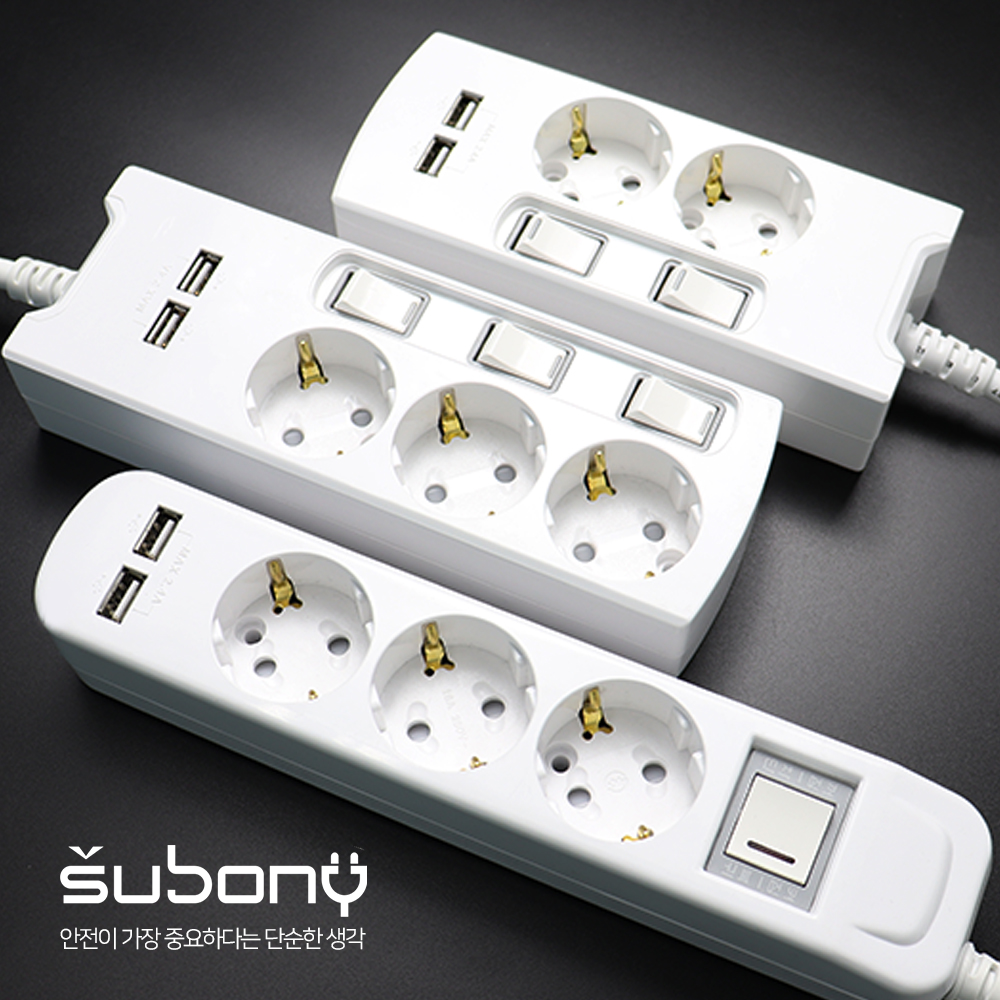
다이소 멀티탭 코너는 급하게 기본 제품을 구하기에는 편하지만 콘센트 수와 전선 길이, 차단 구조까지 세밀하게 고르려면 선택지가 부족하게 느껴질 수 있습니다.
다이소에는 왜 멀티탭이 다양하지 않을까
다이소에 가면 없는 게 없습니다.
생활용품부터 수납, 주방, 욕실용품까지 한 번 들어가면 꼭 뭐 하나는 집어 나오게 됩니다.
그런데 멀티탭 코너에 서 보면 묘하게 선택지가 단순하다는 느낌을 받게 됩니다.
대부분 2구나 3구, 길이는 짧고 디자인도 비슷합니다.
이유가 뭘까 생각해 보면, 다이소라는 공간의 성격과 멀티탭이라는 제품의 구조가 딱 맞닿아 있습니다.
다이소 멀티탭은 기본적으로 가볍게 쓰는 용도에 맞춰져 있습니다.
가격은 거의 대부분 5,000원 이하, 전선 길이는 0.5m나 1m가 많고 길어도 1.5m 정도입니다.
집에서 충전기 하나 더 꽂거나, 스탠드 하나 연결하는 용도라면 충분합니다.
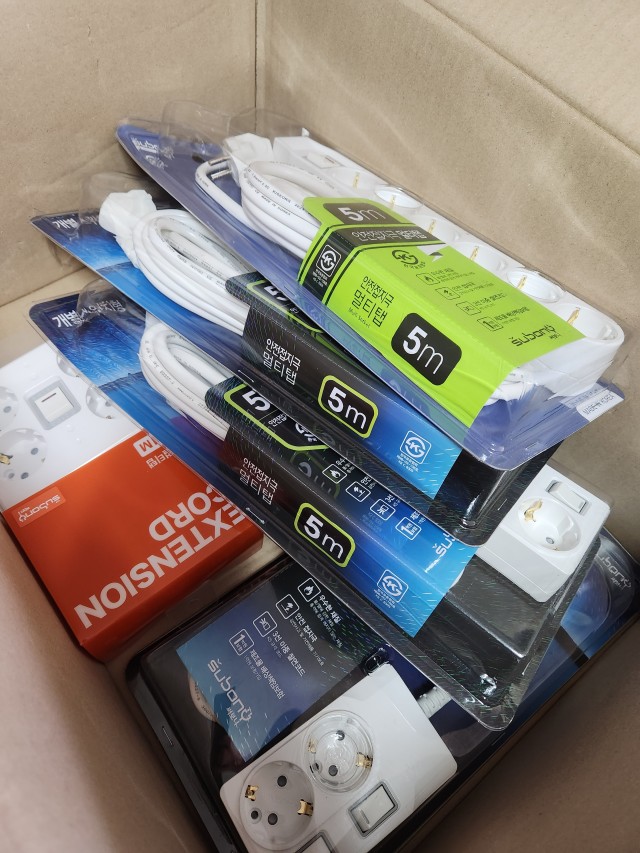
멀티탭은 가격이 먼저 정해지고 구조가 따라옵니다
멀티탭은 겉으로 보면 플라스틱 덩어리 같지만, 실제로는 안에 금속 구조가 들어 있는 전기 제품입니다.
전기가 흐르는 길목마다 동 소재가 들어가고, 이 부분이 멀티탭의 성격을 좌우합니다.
다이소 멀티탭이 대부분 10A 기준인 이유도 여기에 있습니다.
전류를 많이 흘리려면 내부 동단자가 두꺼워야 하는데, 구리 가격은 제품 원가에서 꽤 큰 비중을 차지합니다.
5천 원 안쪽으로 가격을 맞추려면 자연스럽게 내부 구조는 단순해질 수밖에 없습니다.
그래서 다이소 멀티탭은 무겁지 않고, 크지 않고, 필요한 만큼만 쓰는 제품이 많습니다.
고용량 가전을 여러 개 동시에 쓰는 환경보다는, 일상에서 잠깐잠깐 사용하는 용도에 어울립니다.
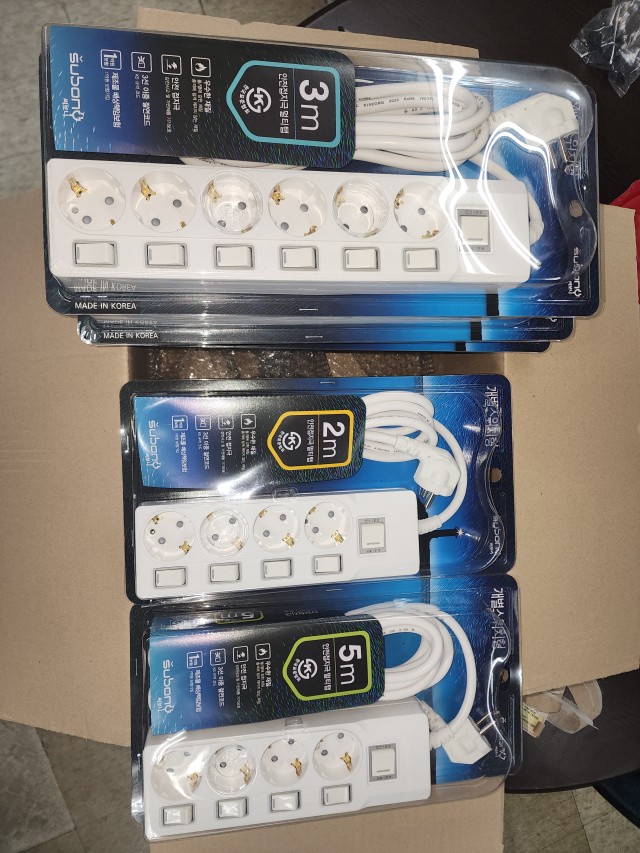
요즘 집에는 멀티탭이 더 많이 필요해졌습니다
예전에는 멀티탭 하나에 TV랑 셋톱박스 정도면 충분했습니다.
요즘은 다릅니다. 책상 위만 봐도 상황이 완전히 달라졌습니다.
모니터, 노트북, 충전기, 태블릿, 스피커, 스탠드까지 한 줄로 연결됩니다.
주방에서도 전기포트, 전자레인지, 에어프라이어가 돌아가는 순간이 많습니다.
이런 환경에서는 단순히 구 수만 있는 멀티탭으로는 부족합니다.
전류 여유가 있는지, 전선이 충분히 굵은지, 길이는 사용 환경에 맞는지까지 함께 보게 됩니다.
그래서 자연스럽게 고용량 멀티탭이나 전선이 긴 멀티탭을 찾게 됩니다.
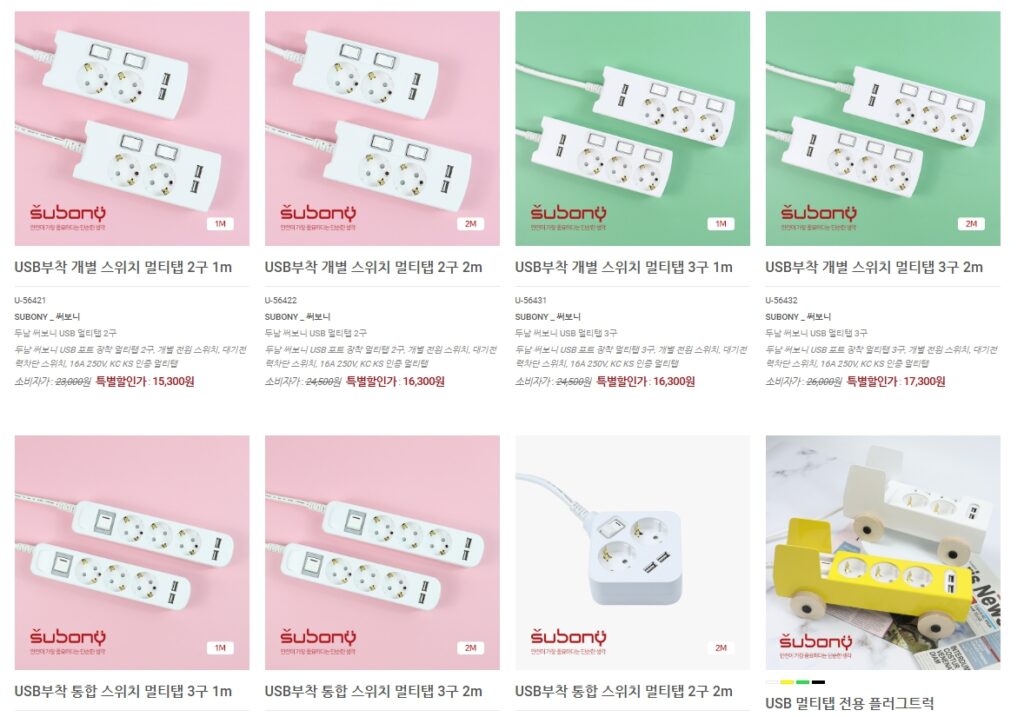
써보니 SUBONY 멀티탭
SUBONY 멀티탭은 처음부터 가볍게 쓰는 용도보다는 일상에서 계속 연결해 두는 환경을 기준으로 만들어졌습니다.
한국에서 생산되는 제품이고, 내부 구조나 전선 구성에서 기본적인 부분에 신경 쓴 느낌이 납니다.
여러 기기를 동시에 연결해도 불안하지 않고, 책상 아래나 주방처럼 전기 사용이 몰리는 공간에서도 안정감이 있습니다.
구 수가 많거나 전선이 긴 제품을 찾는 경우에도 선택지가 있습니다.
배송 방식도 인상적인 부분입니다.
멀티탭은 충격에 아주 예민한 제품은 아니지만, 계속 부딪히면 내부 접점에 영향을 줄 수 있습니다.
SUBONY 멀티탭은 PP 박스로 포장되어 배송되기 때문에 이동 중 충격에 대한 걱정을 덜 수 있습니다.
받자마자 바로 쓰기 좋은 상태라는 점도 일상에서는 꽤 중요합니다.
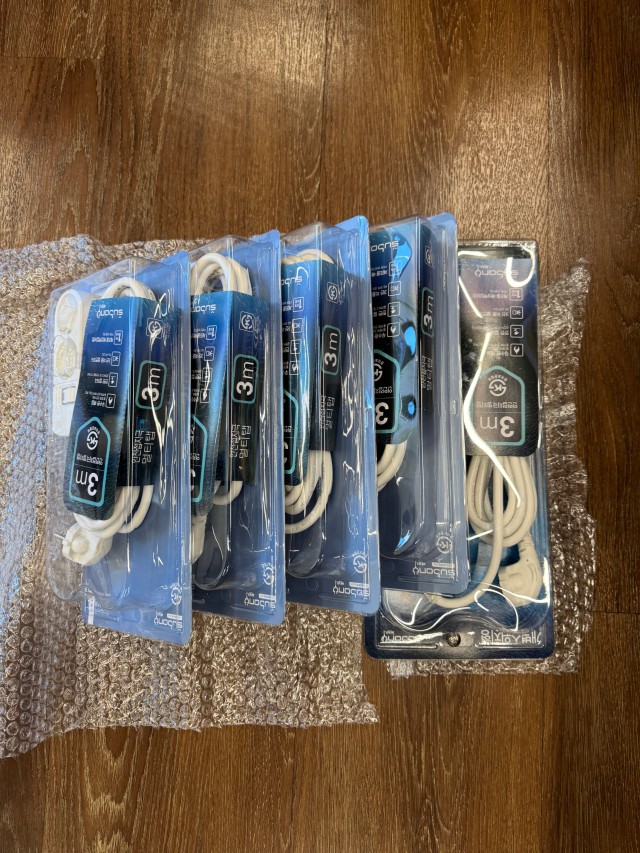
멀티탭은 생각보다 오래 쓰는 물건입니다
멀티탭은 한 번 설치하면 쉽게 바꾸지 않는 물건입니다.
책상 아래, TV 뒤, 냉장고 옆에 놓이면 몇 년씩 그대로 쓰는 경우가 많습니다.
그래서 처음 선택할 때 사용 환경을 조금만 더 생각해보는 게 좋습니다.
가볍게 쓰는 용도라면 다이소 멀티탭도 충분히 역할을 합니다.
하지만 고용량 가전이나 여러 기기를 동시에 사용하는 환경이라면 기준은 달라질 수밖에 없습니다.
써보니 SUBONY 멀티탭은 과하게 튀지 않으면서도 기본이 잘 잡혀 있습니다.
멀티탭을 자주 교체하고 싶지 않은 분들, 한 번 사서 오래 쓰고 싶은 분들에게 어울리는 선택지입니다.
Why Daiso Power Strips Are Limited – If You’re Looking for More Options, Try SUBONY
Why are there so few types of power strips at Daiso?
When you walk into Daiso, it often feels like they have everything.
From everyday household items to storage, kitchenware, and bathroom supplies, it’s hard to leave empty-handed.
But when you stop by the power strip section, something feels a bit different.
The selection is noticeably simple.
Most power strips are either 2-outlet or 3-outlet models.
The cords are short, and the designs look almost the same.
When you think about it, this actually makes sense considering what kind of store Daiso is and how power strips are made.
Daiso power strips are designed for light, everyday use.
Most are priced under 5,000 KRW, with cord lengths typically around 0.5 m or 1 m, and rarely longer than 1.5 m.
For plugging in a phone charger or a desk lamp, that’s usually enough.
With power strips, the price comes first—and the structure follows
A power strip may look like a simple plastic product, but inside it’s a piece of electrical equipment with metal components.
Electricity flows through internal copper parts, and the quality and thickness of those parts make a real difference.
This is why most Daiso power strips are rated at 10A.
To handle higher current, the internal copper conductors need to be thicker.
Copper, however, is one of the biggest cost factors in a power strip.
Keeping the price under 5,000 KRW naturally limits how robust the internal structure can be.
As a result, Daiso power strips tend to be lightweight, compact, and built for minimal use.
They’re better suited for short-term or low-power applications rather than running multiple high-power appliances at once.
Modern homes simply need more from power strips
In the past, one power strip was enough for a TV and a set-top box.
That’s no longer the case.
Look at a desk today.
A monitor, laptop, chargers, tablet, speakers, and a desk lamp are often all connected at the same time.
In the kitchen, electric kettles, microwaves, and air fryers are frequently used together.
In these environments, a basic power strip with just a few outlets isn’t enough.
People start paying attention to current capacity, cable thickness, and whether the cord length actually fits the space.
That’s when longer cables, higher-capacity power strips, and multi-outlet designs become necessary.
Using SUBONY power strips in daily life
SUBONY power strips are made with continuous, everyday use in mind rather than occasional light use.
They are manufactured in Korea, and you can tell that attention has been paid to the basics—internal structure, cable quality, and overall build.
Even with multiple devices connected, they feel stable and dependable.
They work well under desks, in kitchens, or in workspaces where power usage tends to concentrate.
If you’re looking for more outlets or longer cable options, there are practical choices available.
Packaging is another small but important detail.
Power strips aren’t as fragile as some electronics, but repeated impacts can still affect internal contacts.
SUBONY power strips are shipped in PP boxes, which helps reduce damage during delivery.
Receiving a product that’s ready to use right away makes a difference in everyday life.
Power strips are used longer than we expect
Once installed, power strips often stay in place for years.
Under desks, behind TVs, next to refrigerators—they’re rarely replaced unless something goes wrong.
That’s why it’s worth thinking about your usage environment before choosing one.
For light use, a Daiso power strip does the job just fine.
But for high-power appliances or setups with many connected devices, the standard needs to be higher.
SUBONY power strips don’t try to stand out unnecessarily, but the fundamentals are solid.
For those who don’t want to replace their power strip often and prefer something stable for long-term use, they’re a sensible option.
추가 정보
다이소 멀티탭 종류가 적은 이유 SUBONY 멀티탭을 검색하는 사람은 보통 가격이나 구 수만 보는 것이 아니라 실제 생활 공간에서 어떻게 쓰면 좋은지까지 함께 궁금해합니다. 다이소 멀티탭 이 다양하지 않은 이유 다양한 멀티탭을 찾는다면 SUBONY 써보니의 핵심은 정격, 접지, 차단 구조, 전선 길이, 설치 위치를 한 번에 놓고 보는 데 있습니다.
써보니 멀티탭은 제품을 많이 꽂기 위한 도구로만 보기보다, 집 안 전원을 정리하고 사용 환경을 안정적으로 잡는 생활 전기 제품으로 보는 편이 맞습니다. 벽 콘센트 상태, 플러그 결합감, 전선이 꺾이는 위치, 먼지가 쌓이는 자리까지 함께 확인하면 제품 선택 기준이 훨씬 또렷해집니다.
다이소 멀티탭 종류가 적은 이유 SUBONY 멀티탭 선택 기준
- 사용할 가전의 소비전력과 멀티탭 정격을 함께 확인합니다.
- 접지 구조와 플러그 결합 상태를 먼저 봅니다.
- 책상, 거실, 주방, 다용도실처럼 공간별 사용 장면을 나눠 봅니다.
- 전선 길이는 짧아도 불편하고 길어도 정리가 어려워 설치 위치와 함께 봅니다.
- 고용량 가전 주변에서는 제조사 전원 안내와 벽 콘센트 상태가 먼저입니다.
- 멀티탭을 가구 뒤에 완전히 숨기기보다 점검 가능한 위치를 남겨둡니다.
공간별로 달라지는 멀티탭 기준
책상 주변은 모니터, 노트북 어댑터, 조명, 충전 케이블이 한곳에 모입니다. 이 공간에서는 개별스위치와 케이블 방향, 전선 길이가 사용감을 크게 좌우합니다. TV장이나 거실은 셋톱박스, 공유기, 스피커, 게임기처럼 계속 연결되는 제품이 많아 플러그 간격과 먼지 관리가 더 눈에 들어옵니다.
주방과 다용도실은 전기 사용량을 더 신중하게 봅니다. 전자레인지, 에어프라이어, 인덕션, 건조기처럼 전기 부담이 큰 제품은 빈 구멍이 있다고 같이 꽂는 방식으로 판단하기 어렵습니다. 정격, 접지, 차단 구조, 벽 콘센트 상태를 같이 확인해야 실제 사용 환경에 맞습니다.
자주 묻는 질문
다이소 멀티탭 종류가 적은 이유 SUBONY 멀티탭을 볼 때 가장 먼저 확인할 부분은 무엇인가요?
써보니 멀티탭은 어떤 공간에 어울리나요?
고용량 가전도 일반 멀티탭처럼 보면 되나요?
전선 길이는 길수록 좋은가요?
멀티탭을 오래 쓰려면 어떤 부분을 봐야 하나요?
디자인 멀티탭도 안전 기준을 함께 봐야 하나요?
관련 페이지와 검색 키워드
브랜드와 제품 라인은 IWID 써보니 페이지, 써보니 공식몰, 써보니 스마트스토어에서 함께 확인할 수 있습니다. 제품 상세 구성과 구매처를 함께 보면 글에서 다룬 선택 기준을 실제 제품 라인과 연결해 보기 좋습니다.