
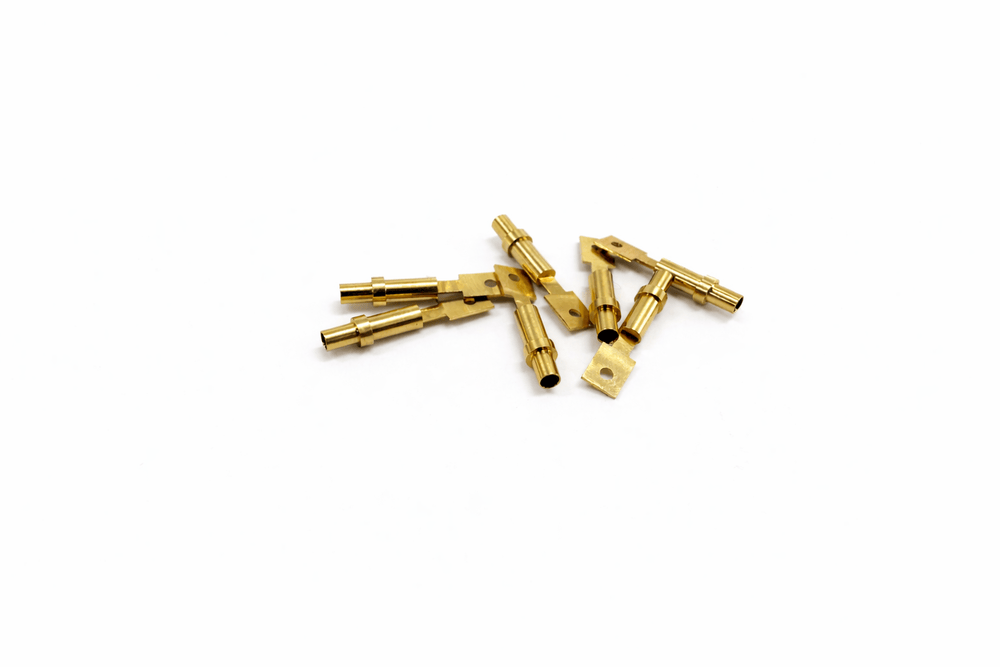
정밀 금속 가공 품질은 퀵 커넥트 콘택터의 체결력과 접촉저항을 일정하게 유지하는 데 직접 영향을 줍니다.
전자접촉기는 고전류를 반복적으로 개폐하는 전력 제어 장치로서, 내부 접속 구조의 안정성이 전체 시스템 신뢰성을 좌우합니다. 이 가운데 퀵 커넥트 콘택터는 전원 라인과 접점 모듈, 또는 외부 배선과 내부 전류 경로를 연결하는 핵심 접속 방식으로 사용됩니다.
퀵 커넥트 구조는 볼트 체결이나 납땜 방식과 달리, 일정 형상의 블레이드와 소켓이 기계적으로 결합되며 접촉 압력에 의해 전기적 연결을 유지하는 것이 특징입니다. 이 구조는 조립성과 유지보수 측면에서 유리하지만, 반복 스위칭 환경에서는 각 구성 부품의 정밀도가 곧 접촉 신뢰성으로 직결됩니다.
전자접촉기에서 퀵 커넥트 콘택터가 요구받는 기능
전자접촉기 내부의 퀵 커넥트 콘택터는 단순한 전기 단자가 아니라, 반복적인 전류 인가와 차단 과정에서 안정적인 접촉 상태를 유지해야 하는 기능성 접속 구조입니다.
모터제어센터와 같은 환경에서는 기동 전류와 차단 전류가 반복적으로 발생하며, 접속부에는 열 사이클과 미세 진동이 동시에 작용합니다. 이러한 조건에서 접속부의 미세한 불안정은 접촉 저항 상승, 국부 발열, 장기 열화로 이어질 수 있습니다. 따라서 퀵 커넥트 콘택터는 기계적 결합 안정성과 전기적 접촉 안정성을 동시에 충족해야 합니다.
퀵 커넥트 콘택터의 구조적 특징과 접속 원리
퀵 커넥트 콘택터는 일반적으로 블레이드형 단자와 이를 수용하는 스프링 접촉 구조로 구성됩니다. 블레이드는 고정된 전류 전달 경로를 형성하며, 소켓 측 스프링 접점은 일정한 탄성력을 통해 접촉 압력을 유지합니다.
이때 블레이드의 폭, 두께, 평행도, 단부 형상은 삽입력과 유지력을 직접적으로 결정하는 요소입니다. 치수가 과도하게 크거나 작을 경우 삽입 불량이나 접촉 압력 저하가 발생할 수 있으며, 형상 정렬이 어긋나면 접촉이 편심되어 국부 마모와 접촉 저항 불균형이 발생합니다. 이러한 이유로 퀵 커넥트 콘택터는 반복 결합을 전제로 한 정밀 기계 요소로 취급됩니다.
퀵 커넥트 콘택터 내부에 적용되는 CNC 정밀 접속 부품
전자접촉기용 퀵 커넥트 콘택터 내부에는 블레이드와 하우징을 연결하거나, 전류를 내부 접점부로 전달하는 CNC 가공 접속 부품이 사용됩니다. 이 부품은 구조 지지 역할에 그치지 않고, 전류 경로의 일부로서 전기적·열적 거동에 직접 관여합니다.
빈번한 스위칭 환경에서는 순간적인 전류 증가와 반복적인 온도 변화가 발생하므로, 이 CNC 접속 부품은 충분한 전도성, 열 전달 능력, 기계적 강성을 동시에 요구받습니다.
CNC 가공 정밀도가 접촉 안정성에 미치는 영향
퀵 커넥트 콘택터에서 발생하는 접촉 불량의 상당 부분은 접점 재질보다, 이를 지지하고 정렬하는 CNC 가공 부품의 정밀도 부족에서 기인합니다.
블레이드가 결합되는 부위의 평행도나 동심도가 미세하게 벗어나면 소켓 스프링 접점과의 접촉이 한쪽으로 치우치게 됩니다. 이로 인해 접촉 면적이 비대칭으로 형성되고, 국부 접촉 저항 상승과 편마모가 발생합니다. 이러한 현상은 초기 작동 단계에서는 드러나지 않지만, 반복 스위칭 환경에서는 점진적인 열화로 누적됩니다.
또한 가공 표면에 잔존하는 미세 버나 불균일한 가공 흔적은 삽입 과정에서 소켓 접점을 긁어 도금 손상을 유발할 수 있습니다. 이 과정에서 발생한 미세 금속 분진은 접촉면으로 유입되어 접촉 저항 불안정과 장기 신뢰성 저하로 이어질 수 있습니다. 따라서 CNC 가공 부품은 외관 기준이 아니라 접촉 안정성 관점에서 표면 품질 관리가 이루어져야 합니다.
퀵 커넥트 콘택터용 쾌삭 황동 CNC 부품의 재질적 특성
퀵 커넥트 콘택터 접속 부품에 쾌삭 황동이 사용되는 이유는 단순한 가공 편의성 때문만은 아닙니다. 황동은 구리 기반 합금으로서 전기 전도성을 확보하면서도 절삭성이 우수해, 미세 형상 구현과 반복 생산 시 치수 안정성이 뛰어납니다.
이러한 특성은 블레이드 결합부, 원통형 체결부, 내부 전류 전달부를 하나의 일체형 부품으로 설계하는 데 유리하며, 조립 공정 단순화와 접속 신뢰성 확보에 기여합니다.
다만 황동은 표면 산화와 마찰 마모에 민감할 수 있으므로, 퀵 커넥트 콘택터용 부품에서는 가공 후 표면 거칠기 관리와 도금 전 전처리 품질이 중요하게 작용합니다. 이 부품이 직접적인 아크를 담당하지 않더라도, 전류 경로 상에 위치하는 이상 표면 상태는 장기 접촉 안정성에 영향을 미칩니다.
빈번한 스위칭 환경에서 요구되는 형상 설계와 열 관리
모터제어센터와 같이 반복 개폐가 이루어지는 환경에서는 접점부뿐 아니라 접속 부품 전체가 지속적인 열 팽창과 수축을 경험합니다. 이 과정에서 CNC 접속 부품은 단순한 구조 지지물을 넘어, 열을 분산시키고 전류 흐름을 안정화하는 역할을 수행합니다.
부품 단면이 불균일하거나 형상 변화가 급격할 경우, 특정 구간에 열이 집중되어 접촉 안정성이 저하될 수 있습니다. 따라서 전자접촉기용 퀵 커넥트 콘택터 부품은 전류 경로의 연속성과 열 분산을 동시에 고려한 형상 설계가 요구됩니다.
퀵 커넥트 콘택터용 CNC 정밀 부품의 관리 관점 정리
퀵 커넥트 콘택터에 사용되는 CNC 정밀 접속 부품은 블레이드 결합부의 폭과 두께, 평행도와 같은 치수 정밀도가 삽입력과 유지력의 안정성을 좌우합니다. 접촉면 인접부의 표면 거칠기와 버 관리 수준은 접촉 저항의 장기 안정성과 직결됩니다.
또한 단면 변화와 코너 처리 방식은 발열과 응력 집중에 영향을 미치며, 쾌삭 황동 조직의 일관성은 전도성과 열 전달 특성의 균일성을 좌우합니다. 결합부 정렬성과 가이드 형상은 반복 탈착 환경에서 조립 재현성을 결정하는 요소입니다.
마무리
전자접촉기용 퀵 커넥트 콘택터는 빠른 조립성과 안정적인 전기 접속을 동시에 요구받는 구조입니다. 이 구조의 신뢰성은 접점 소재 자체보다, 그 접점을 지지하고 전류를 전달하는 CNC 정밀 접속 부품의 완성도에 의해 크게 좌우됩니다.
쾌삭 황동으로 CNC 가공된 접속 부품은 치수 안정성과 생산성을 확보하는 동시에, 반복 스위칭 환경에서 접촉 압력과 전류 흐름을 안정화하는 역할을 수행합니다. 이러한 관점에서 해당 부품은 단순한 기계 부품이 아니라, 전자접촉기용 퀵 커넥트 콘택터의 성능을 구조적으로 뒷받침하는 핵심 정밀 부품으로 평가하는 것이 타당합니다.
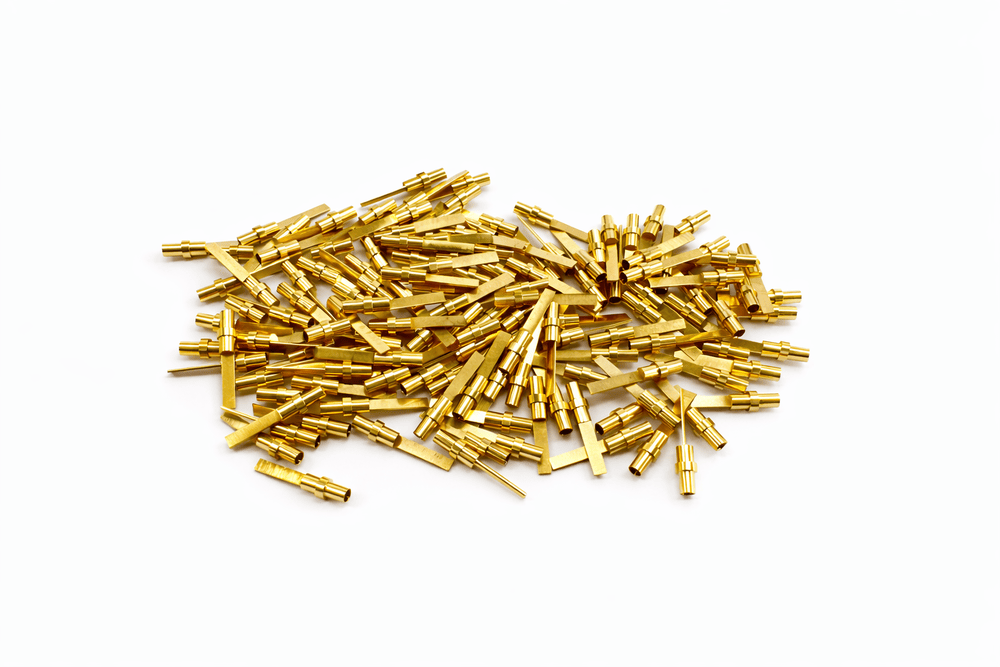
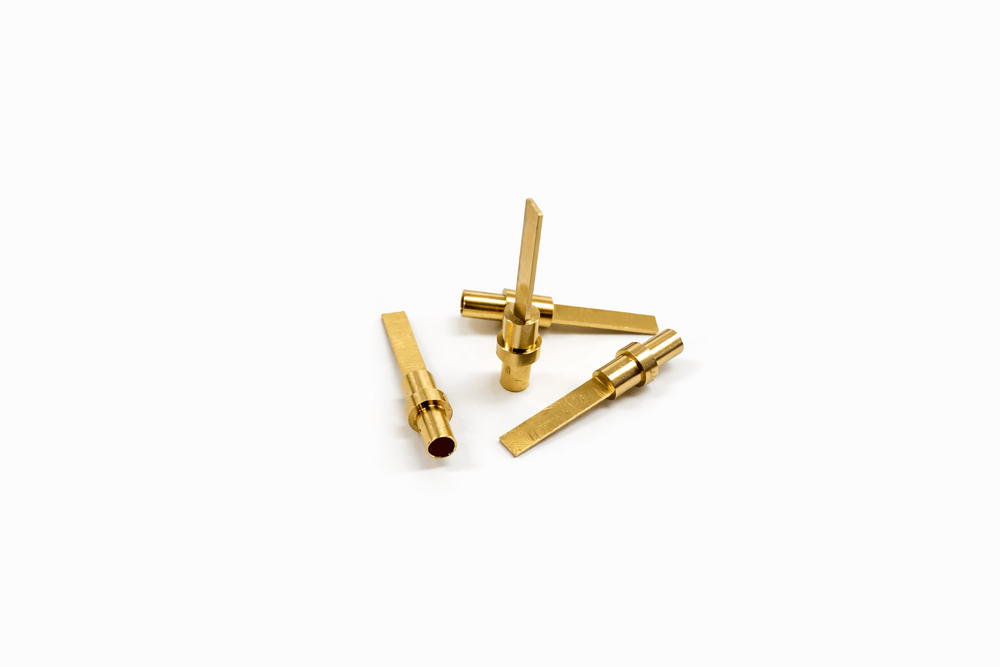
Technical Configuration of Quick Connect Contactors and CNC Brass Precision Connection Components for Electromagnetic Contactors
Electromagnetic contactors are power control devices designed to repeatedly switch high current loads, where the stability of internal connection structures directly determines overall system reliability. Within these systems, quick connect contactors are widely used as core connection interfaces that link power lines to contact modules or connect external wiring to internal current paths.
Unlike bolted joints or soldered connections, quick connect structures rely on mechanical engagement between a blade and a socket, maintaining electrical continuity through controlled contact pressure. While this approach offers advantages in assembly efficiency and maintenance, the dimensional accuracy of each internal component becomes critical in environments subject to frequent switching.
Functional Requirements of Quick Connect Contactors in Electromagnetic Contactors
Within electromagnetic contactors, quick connect contactors are not simple electrical terminals but functional connection interfaces that must maintain stable contact conditions under repeated current application and interruption.
In environments such as motor control centers, high inrush currents and repeated load switching introduce continuous thermal cycling and micro-vibration at the connection interface. Even minor instability at the connection point can lead to increased contact resistance, localized heating, and long-term degradation. As a result, quick connect contactors must simultaneously satisfy mechanical coupling stability and electrical contact reliability.
Structural Characteristics and Connection Principles of Quick Connect Contactors
Quick connect contactors typically consist of a blade-type terminal and a corresponding spring-loaded socket contact. The blade forms a fixed current-carrying interface, while the socket-side spring contact maintains consistent contact pressure and allows repeated insertion and removal.
Blade width, thickness, parallelism, and edge geometry directly determine insertion force and retention force. Deviations from the designed dimensional range can result in insertion difficulty, insufficient contact pressure, or uneven contact distribution. When alignment errors occur, contact becomes eccentric, accelerating localized wear and contact resistance imbalance. For these reasons, quick connect contactors are treated as precision mechanical interfaces designed for repeated mating cycles rather than simple terminals.
CNC Precision Connection Components Applied Inside Quick Connect Contactors
Inside electromagnetic contactors, CNC-machined connection components are used to link the blade to the housing or to transfer current from the blade to the internal contact assembly. These components serve not only as structural supports but also as integral elements of the electrical current path.
Under frequent switching conditions, instantaneous current surges and repeated thermal cycling occur. Accordingly, CNC-machined connection components must simultaneously provide adequate electrical conductivity, effective heat dissipation, and sufficient mechanical rigidity.
Influence of CNC Machining Accuracy on Contact Stability
A significant portion of contact failures in quick connect contactors originates not from the contact material itself, but from insufficient precision in the CNC-machined components that support and align the interface.
If parallelism or concentricity at the blade connection area deviates even slightly, contact pressure within the socket spring becomes uneven. This results in asymmetric contact areas, localized increases in contact resistance, and uneven wear. Although such issues may not be evident during initial operation, they accumulate progressively under repeated switching conditions.
Microscopic burrs or irregular machining marks on the surface can also scratch the socket contact during insertion, damaging surface plating. The resulting metallic debris may migrate into the contact interface, causing unstable contact resistance and accelerated degradation. Therefore, CNC-machined components must be controlled from a contact reliability perspective rather than evaluated solely on visual appearance.
Material Characteristics of Free-Cutting Brass CNC Components
The use of free-cutting brass for quick connect contactor connection components is not driven solely by ease of machining. As a copper-based alloy, brass offers adequate electrical conductivity while providing excellent machinability, enabling precise feature formation and stable dimensional control in repeated production.
These characteristics support integrated designs that combine blade interfaces, cylindrical fastening sections, and internal current-carrying paths into a single component, simplifying assembly processes and enhancing connection reliability.
However, brass is relatively sensitive to surface oxidation and frictional wear. For this reason, surface roughness control and plating pre-treatment quality are critical for quick connect contactor components. Even when the component does not directly handle switching arcs, its position within the current path means that surface condition significantly influences long-term contact stability.
Geometric Design and Thermal Considerations in Frequent Switching Environments
In environments such as motor control centers, where repeated opening and closing operations occur, not only the contact points but the entire connection assembly undergoes continuous thermal expansion and contraction.
Under these conditions, CNC-machined connection components function beyond structural support, contributing to heat distribution and current flow stabilization. If the component cross-section is uneven or includes abrupt geometric transitions, localized heat concentration may occur, leading to reduced contact stability. Consequently, quick connect contactor components for electromagnetic contactors require geometric designs that consider both current continuity and thermal dissipation.
Management Considerations for CNC Precision Components Used in Quick Connect Contactors
Dimensional accuracy of blade interfaces, including width, thickness, and parallelism, directly governs insertion force consistency and retention stability. Surface roughness and burr control near contact-adjacent areas affect long-term contact resistance stability.
Section transitions and corner treatments influence heat concentration and stress distribution, while consistency in free-cutting brass microstructure supports uniform electrical conductivity and thermal transfer. Alignment accuracy and guide geometry determine assembly repeatability and reliability under repeated mating conditions.
Conclusion
Quick connect contactors provide rapid assembly and stable electrical connections within electromagnetic contactors. The reliability of this structure depends not only on the contact material itself, but to a large extent on the precision and integrity of the CNC-machined connection components that support and transmit current.
CNC-machined connection components made from free-cutting brass ensure dimensional stability and manufacturing efficiency while stabilizing contact pressure and current flow under frequent switching conditions. From this perspective, these components should be regarded not as simple mechanical parts, but as critical precision elements that structurally support the performance and reliability of quick connect contactors used in electromagnetic contactors.
추가 정보
콘택터 CNC 정밀 접속 부품은 단순한 가공명보다 넓은 제조 기준으로 봐야 합니다. 전자접촉기 내부 퀵 커넥트 콘택터와 CNC 황동 정밀 접속 부품에서는 소재 특성, 공정 조건, 치수 안정성, 표면 품질, 조립 환경이 함께 맞아야 실제 부품 신뢰성이 확보됩니다.
ID METAL의 제조 기술 콘텐츠는 한 가지 장비나 공정만 분리해서 설명하기보다, 도면 요구사항과 소재 선택, 가공 순서, 후처리, 검사 기준이 어떻게 연결되는지를 중심으로 다룹니다. 작은 공차 차이나 표면 상태도 전기접점, 판금, CNC 부품에서는 기능 품질로 이어질 수 있습니다.
콘택터 CNC 정밀 접속 부품 검토 기준
- 소재 규격과 실제 사용 환경을 함께 확인합니다.
- 치수 공차, 위치도, 평탄도, 표면 거칠기 같은 도면 요구를 공정 기준으로 연결합니다.
- 가공 후 버, 변형, 잔류응력, 표면 오염이 기능면에 남지 않도록 관리합니다.
- 후처리와 세척, 포장 조건까지 품질 흐름에 포함합니다.
- 반복 생산에서는 초품 기준과 양산 중 측정 기준을 분리해 관리합니다.
- 전기적 기능이 있는 부품은 접촉저항, 체결 압력, 표면막, 사용 온도까지 함께 봅니다.
제조 현장에서 함께 보는 요소
CNC 가공은 치수 정밀도만으로 끝나지 않습니다. 기준면을 어디로 잡는지, 클램핑 과정에서 변형이 생기지 않는지, 공구 마모가 표면에 어떤 흔적을 남기는지까지 봐야 합니다. 판금과 NCT 가공에서는 타공 배열, 절곡 순서, 도금이나 도장 후 치수 변화까지 연결해서 봅니다.
전기접점이나 전장 부품은 소재와 표면 상태가 더욱 민감합니다. 접촉저항이 안정적으로 유지되는지, 반복 개폐나 진동 조건에서 체결 상태가 흔들리지 않는지, 후처리 과정이 전기적 특성에 영향을 주지 않는지 확인해야 합니다.